01Appliance repair call intake
Intake should preserve the customer, address, appliance type, brand, model or serial information available, symptoms, error code, photos, access, prior service, requested timing, and questions requiring review. It must distinguish a reported fault from a technician diagnosis.
Test it: Call with a refrigerator complaint and incomplete model number, then add a photo and confirm the correct customer, job, notification, assignment, and human handoff.
02Booking and dispatch control
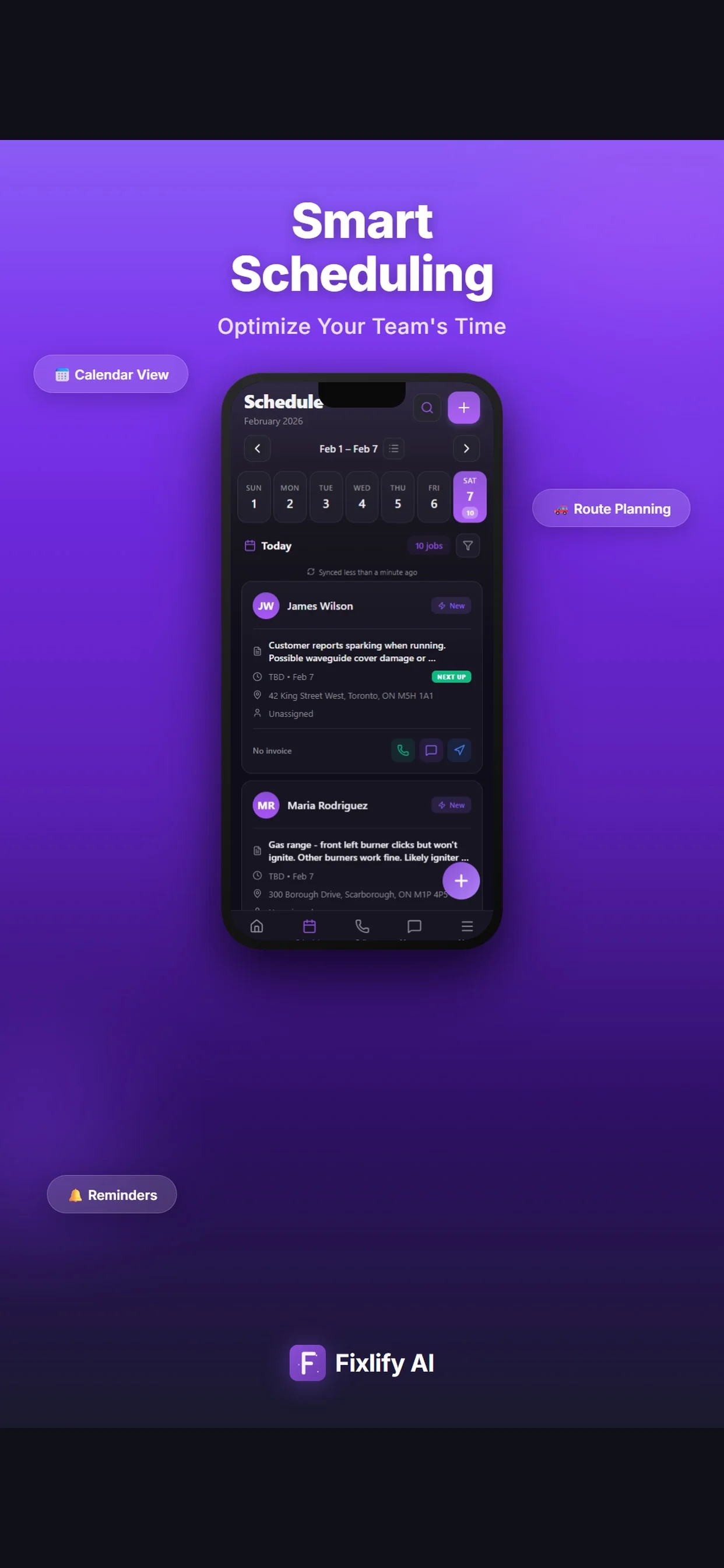
Appliance repair scheduling software should show appointment windows, assigned people, job context, travel, and changes. Confirm what a person must review before a time is offered or a technician is assigned, especially for urgent or specialized work.
Test it: Create a routine washer call, an urgent no-cooling request, an unsupported appliance, a conflict, and a reschedule; inspect every offered time, assignment, notification, and override.
03Diagnostic and field record
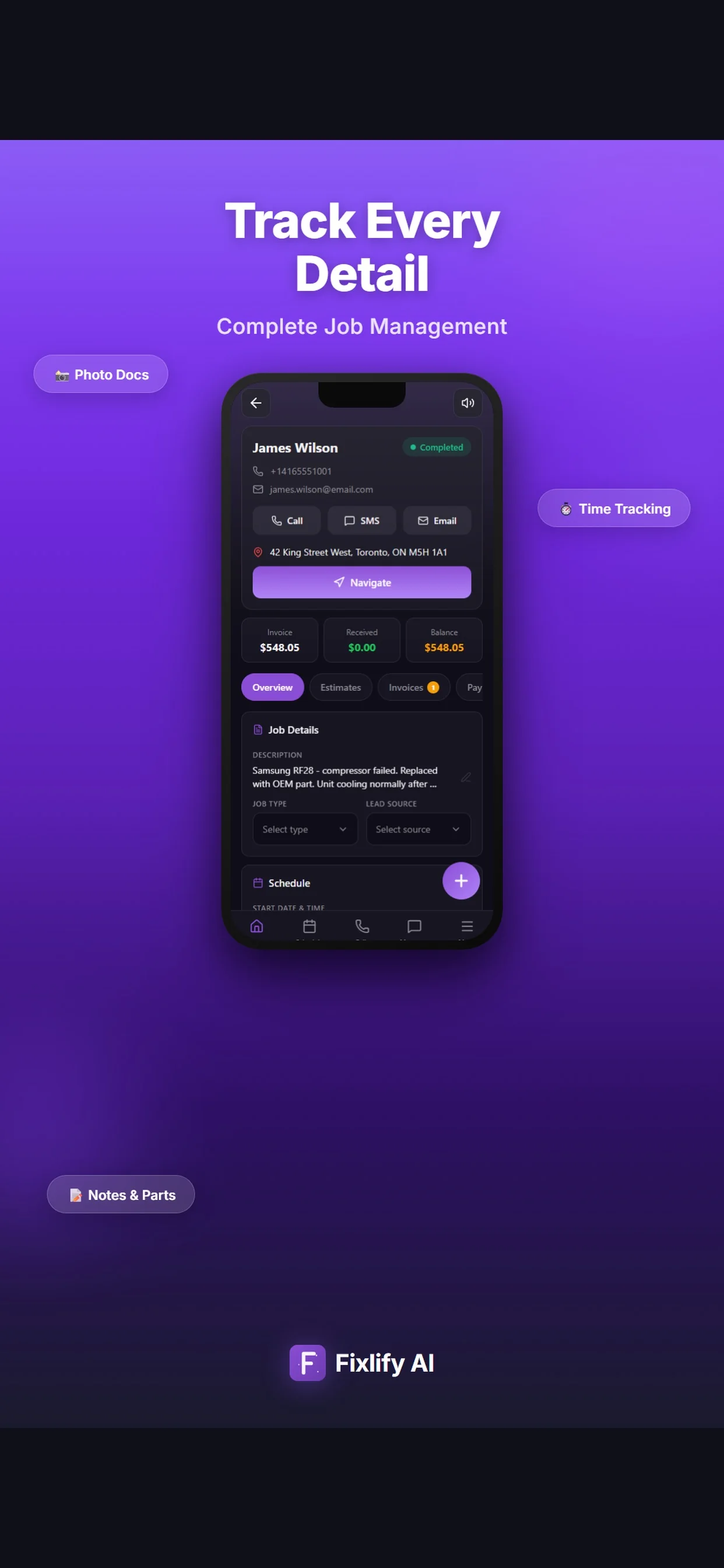
The technician needs the customer report and a controlled place to record observations, photos, diagnosis, work completed, recommended next action, and parts references. Check permissions, timestamps, corrections, attachments, and the separation between reported and verified information.
Test it: Open the job on the real field device, add findings and photos, correct one note, defer the repair, and confirm the office sees the complete history without losing the original report.
04Parts-dependent return visit
Fixlify can create a job-linked parts request, record supplier and expected-delivery details, move items from requested to ordered and received or with the technician, record quantities used, returned, or written off, and connect used-part cost to the job. That does not prove catalog lookup, compatibility validation, warehouse inventory, or supplier ordering.
Test it: Create a parts request, record the external purchase reference and expected delivery, receive and assign the item, record the quantity used, schedule the return, and inspect the linked job cost and history.
05Estimate, approval, and invoice
The estimate should use business-verified diagnosis, labor, parts, service charges, taxes, assumptions, exclusions, and approval terms. Compare estimate versions, declined work, deposits, payments, refunds, corrections, and the final invoice.
Test it: Create a diagnostic charge and repair option, revise the part, record approval, complete the return visit, correct the invoice, and reconcile the payment reference.
06AI phone and customer communication
If AI phone intake affects the purchase, define allowed questions, appliance types, service area, business hours, appointment rules, pricing boundaries, safety language, emergencies, consent, retention, and human escalation. Review usage charges as part of the test.
Test it: Call with a routine booking, unknown model, leak, gas smell, price demand, unsupported brand, warranty claim, conflict, cancellation, angry caller, transfer request, and silence; inspect records, handoffs, and credits.
07Mobile, permissions, and connectivity
An app listing does not prove full offline operation. Define which roles can see customer details, prices, photos, technician notes, estimates, invoices, payments, and schedule changes, plus which steps must work during weak connectivity.
Test it: Run intake review, field notes, photos, and completion on the actual phone and connection; remove connectivity, change a permission, reconnect, and inspect synchronization and audit behavior.
08Twelve-month cost and exit
Compare users, jobs, AI credits, phone number, calls, messages, payments, add-ons, migration, training, support, parts or warranty systems, accounting, storage, taxes, renewal, internal labor, export, retention, and cancellation.
Test it: Calculate low, expected, and busy-month use for a year, then export customers, appliance notes, jobs, appointments, documents, photos, invoices, and payment references before signing.