01Reproduce a complete property request
List each entry point and handoff from inquiry through property match, qualification, job, schedule, field visit, estimate, approval, invoice, payment, and follow-up. Separate customer-reported conditions from inspected and approved scope.
Test it: Submit a new cleanup request and a returning-customer irrigation report. Capture addresses, contacts, access, reported work, preferred windows, an unsupported request, notes, photos, job records, appointments, assignments, estimate revisions, invoices, payment status, and every role's view.
02Test one customer with several properties
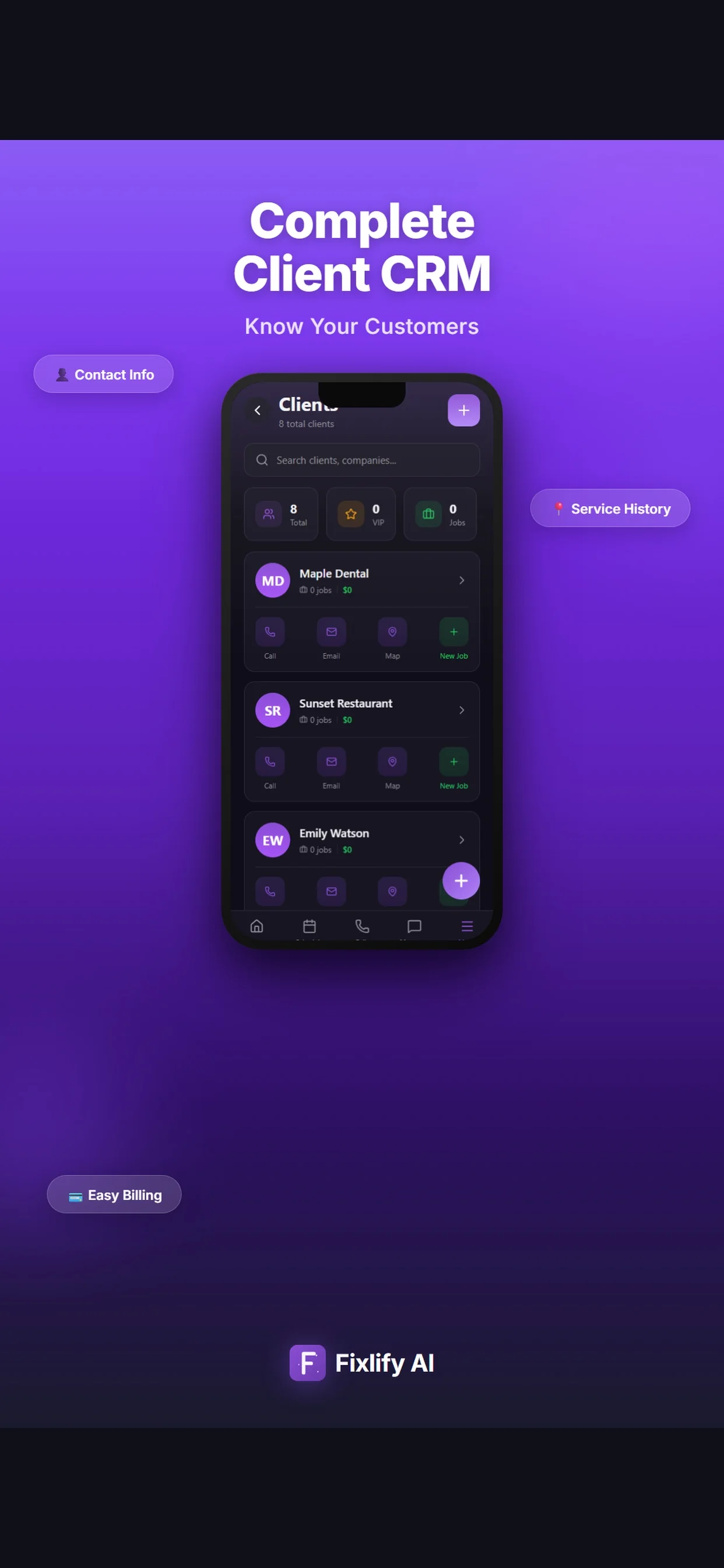
Customer-level billing and communication can conflict with location-level contacts, access, tax, service history, and instructions. Define where each detail belongs and who can view or edit it.
Test it: Create three properties for one account with different contacts and instructions. Schedule work at two addresses, revise one property note, reassign one visit, prepare separate and combined billing examples, export the data, and confirm no detail appears on the wrong job.
03Break a recurring plan safely
A recurring label does not prove series behavior. Define frequency, season, holidays, skips, pauses, one-time changes, reassignment, duration, price changes, notifications, invoices, and end dates.
Test it: Build a three-month weekly example, move one holiday visit, skip one occurrence, add a one-time task, replace one assigned person, pause and resume service, change a future price, and inspect every appointment, message, job, invoice, and audit record.
04Run a difficult schedule and route day
Route order depends on coordinates, travel data, promised windows, duration, breaks, skills, access, priority, vehicle constraints, and dispatcher judgment. A shorter geometric route can still violate the operating plan.
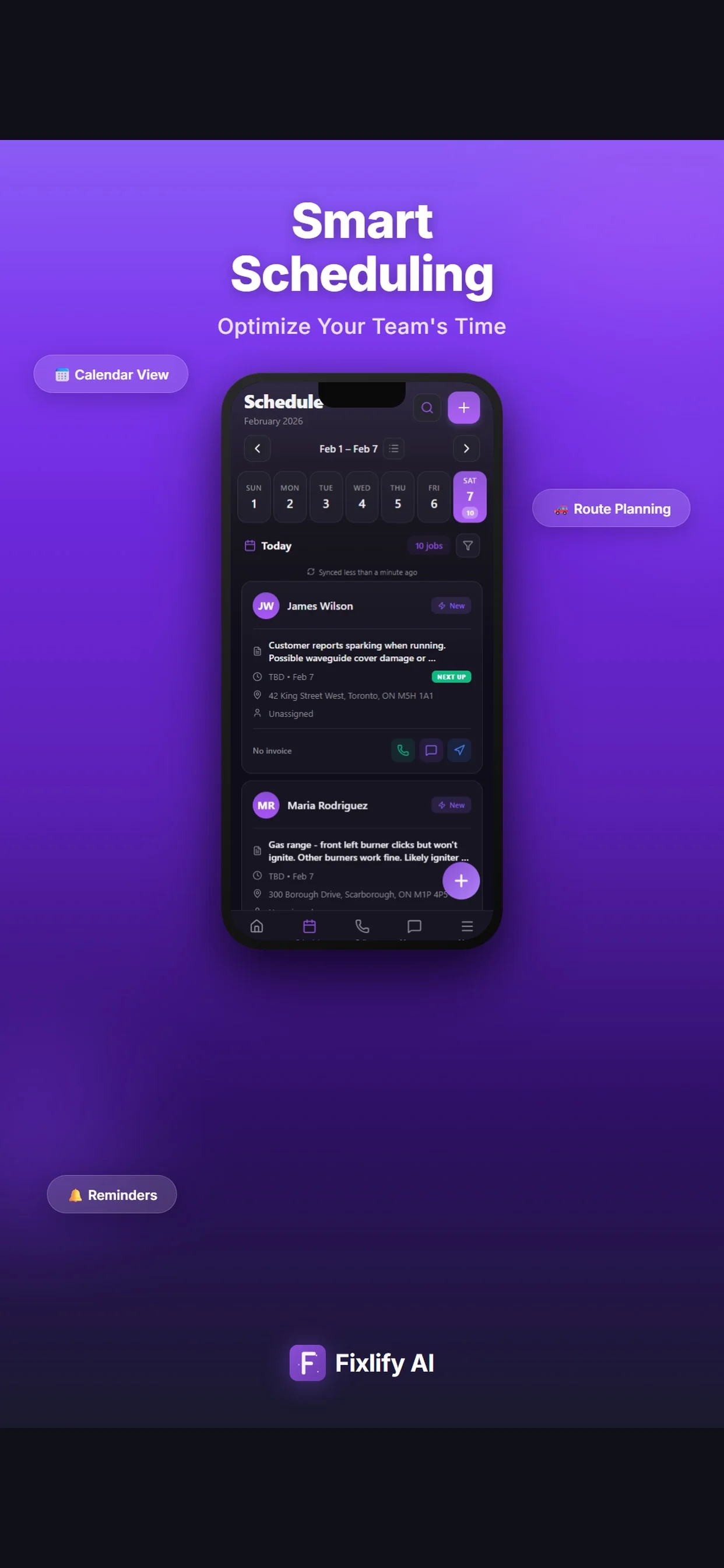
Test it: Create eight assigned geocoded jobs with two customer windows, an urgent insertion, an absent technician, a cancellation, and one missing coordinate. Generate the suggestion, compare it with expected travel, review each constraint, apply an approved order, reschedule manually, and inspect notifications and history.
05Verify field records and weak connectivity
A mobile screen is useful only if the intended user can see the right context, record the right evidence, and recover safely from delayed or failed synchronization. Define privacy and retention before loading customer data.
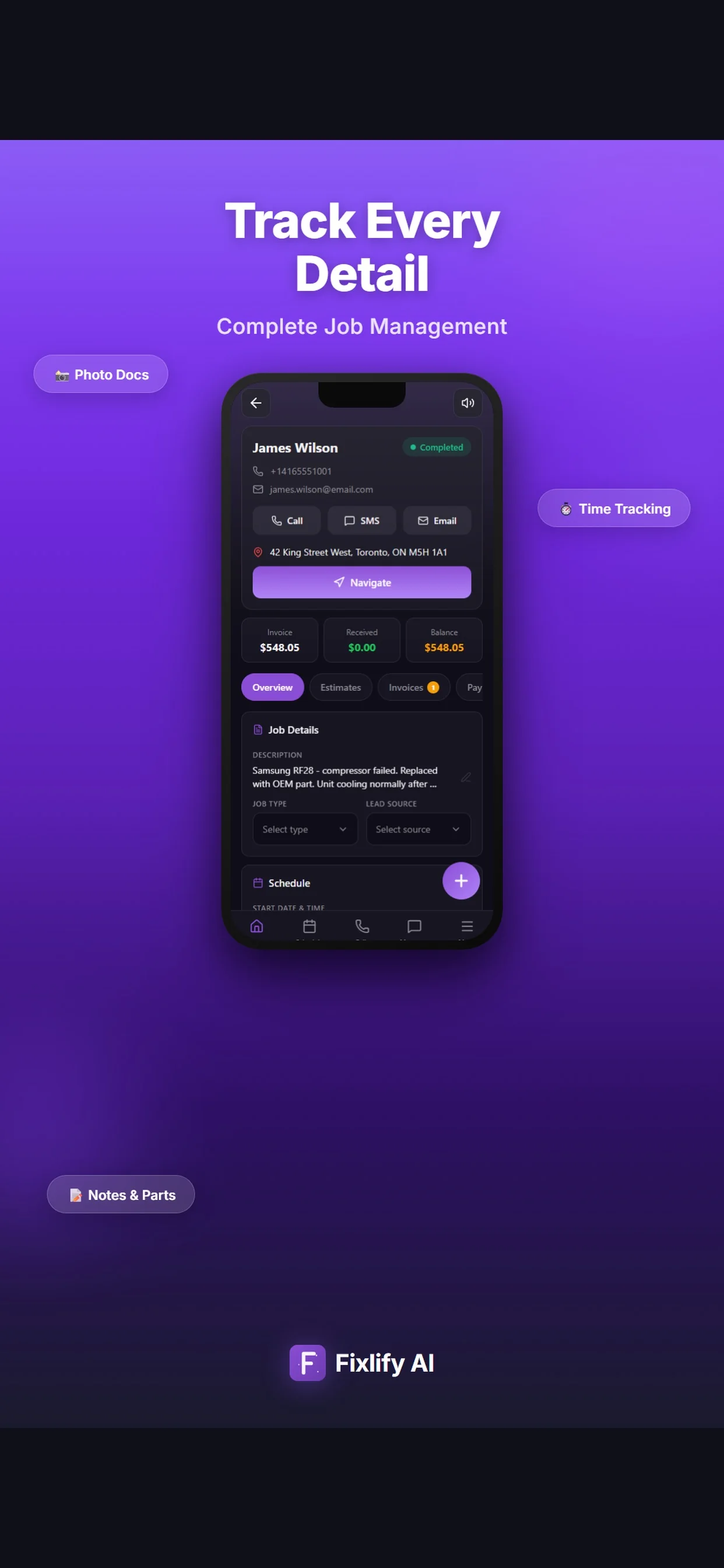
Test it: On the intended phone, open assigned work, read property notes, change status, add notes, tasks, and photos, record an exception, remove connectivity, retry, reassign the job, and inspect office, field, unauthorized, export, and customer-facing views.
06Trace an estimate change into the invoice
Reported work, inspected scope, estimate versions, approvals, added work, partial completion, invoice lines, payments, refunds, and accounting records must reconcile without silent replacement.
Test it: Create a maintenance job with a proposed repair, revise quantities and tax, obtain the intended approval evidence, complete only part, add approved work, create and correct the invoice, record a partial payment and refund, then reconcile every record and permission.
07Test phone intake against company policy
AI phone behavior depends on approved knowledge, service area, qualifying questions, allowed appointment actions, credits, consent, escalation, and failure handling. A successful normal call does not establish boundary behavior.
Test it: Call as a new lead, returning customer, out-of-area caller, emergency, unsupported design request, chemical-treatment inquiry, price shopper, reschedule, cancellation, accented speaker, silent caller, and transfer request. Compare transcripts, lead or booking records, credit use, notices, and human escalation with policy.
08Price the complete year and exit
Subscription price is one part of cost. Include members, jobs, phone, AI, messages, payments, maps, GPS, measurement, accounting, payroll, storage, support, implementation, migration, training, taxes, renewal, and internal labor.
Test it: Calculate normal and peak months, obtain dated written terms, export customers, properties, jobs, schedules, estimates, invoices, payments, files, users, and history, then simulate migration, failed cutover, rollback, access removal, cancellation, and final reconciliation.